Project 1: Establishment of Multi-Material Additive Manufacturing Heuristics for PLA/TPU Interfacial Adhesion
A heuristic guide for Design for Additive Manufacturing with PLA/TPU composites.
Project Overview
This project bridges the gap between advanced multi-material 3D printing and practical design application. Focusing on the powerful combination of rigid PLA and flexible TPU, I investigated nine unique interfacing techniques—from bio-inspired structures to modern adaptations of traditional joinery—and rigorously analyzed their structural performance using Finite Element Analysis. The core contribution is the translation of these complex simulation findings and design principles into a clear, accessible set of "Multi-Material Print Heuristic Cards," a design aid created to help engineers and designers make more informed decisions, sidestep common manufacturing challenges, and unlock new possibilities in creating functional, multi-material components.


Sample Heuristic Card - Gyroid Structures


Design Inspiration - exploded, assembled and printed sample


Design Adapted- exploded, assembled and printed sample
Project 2: Quick Trike: Wheelchair Caster Solution
A wheelchair caster solution, designed using AI generative design and validated by FEA, that improves mobility over gravel by lifting front casters using compliant mechanisms, demonstrating enhanced traversing speed and affordability.
Project Overview
This project, addressed the critical design challenge of enabling wheelchair users to traverse challenging gravel terrain. The product development cycle commenced with Opportunity Development, involving market research to identify existing solutions and comprehensive user interviews to define precise requirements and performance measures, including product mass, traversing speed, durability, compatibility, and user autonomy. During Concept Development, various initial concepts were generated through brainstorming and a morphological matrix, leading to physical prototyping and testing of solutions like increased wheel surface area and a trike configuration. Benchmarking confirmed the trike solution's superior potential. The Subsystem Engineering phase focused on refining the attachment mechanism, leveraging compliant mechanisms for reduced part count and precise motion, and optimizing the device's shape and caster location. Generative design in Fusion 360 and iterative 3D printing facilitated the refinement of the compliant mechanism design, which features flexural pivots and pre-curved beams. The final design, System Refinement & Production, realized through 3D printing with Onyx, demonstrated minimal displacement and concentrated stress during Finite Element Analysis (FEA). This innovative mechanical assembly achieved a 46.8% increase in speed over gravel and proved significantly more affordable than existing solutions, successfully meeting all established design specifications

Morphological matrix of Ideas


Initial testing of current market options and initial ideas


Final Render
The FEA showed minimal displacement

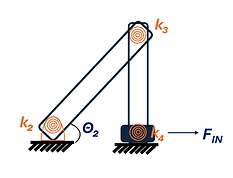
Compliant mechanism design features three small length flexural pivots


Iterations and load case variations of design using Fusion 360 Generative Design

Final design was 3D printed with Onyx


Final design resulted in a 46.8% increase in speed when moving over gravel compared to without the device
Project 3: Mars Sample Return Simulation Challenge
Innovating for secure payload delivery and retrieval in extreme space environments
Project Overview
This project focused on designing and optimizing a Pixy Stick Retriever (PSR) container using additive manufacturing techniques for secure payload handling in space. We addressed the lack of load specifications by calculating an estimated 100N impact force from a simulated 100-foot freefall. Utilizing generative design in Fusion 360, we iteratively explored materials like AlSi10Mg to achieve optimal weight efficiency and structural integrity. The final design, produced via Laser Powder Bed Fusion (LPBF), features a Body Centered Cubic lattice structure for impact management. Key outcomes include a light total mass of 300.3 g (40% below requirement) , a low print-to-part ratio of 1.019, minimal post-processing and a safety factor exceeding 1.4. Experimental drop tests validated the lattice structure's resilience, confirming the design's robust performance.

Iteration Process of PSR Solution

PSR Solution Assembly

PSR Parts

PSR COTS

Initial Ideation & Brainstorming of Ideas

Alpha Prototype using cardboard

Internal Lattice Structure of Base

Lid Design


Propeller Design
Fabrication of parts using Material Extrusion - FFF
Project 4: Raptor Drone
Durable, modular autonomous drone from generative 3D design and testing.
Project Overview
The "RAPTOR" involved the conceptualization, design, and 3D modeling of an autonomous drone using Autodesk Fusion 360, emphasizing modularity and durability via generative design. Conducted from April to November 2021 for an Autodesk certification , the design process included brainstorming, detailed 3D modeling, and iterative prototyping and testing. Static load testing confirmed exceptional structural integrity, with the drone's body withstanding loads up to 200% of its maximum takeoff weight (MTOW). Dynamic load testing from 50 to 150 Newtons demonstrated robust resilience, although the outer casing showed stress at higher impact levels, indicating areas for future reinforcement

Final Render


Final Render
Animation
Project 5: VR Headset Re-Design: Universal Comfort and Accessibility
Universally comfortable VR headset designed through anthropometric data for diverse users
Project Overview
This project focused on redesigning a VR headset for universal comfort and accessibility by analyzing anthropometric data. From September to December 2023, the team collected diverse anthropometric data, focusing on head width, circumference, interpupillary distance (IPD), and nose bridge size, aiming to accommodate over 95% of users. The design process involved initial exploration, converging insights to critical metrics, and refinement through iterative prototyping and user feedback. Quantitative testing included measuring fit for head circumference (5th-95th percentile), IPD adjustability (45-75 mm in 0.5 mm increments), nose bridge pressure mapping, and weight distribution. Qualitative feedback covered comfort, usability, adjustability, and visual experience. Results showed high accommodation percentages for both U.S. (e.g., 97.64% for IPD) and Indian populations (e.g., 99.74% for nose breadth), though the Indian data had varying sample sizes. Future work includes cost analysis, emphasizing the importance of inclusive design for broader accessibility.


Redesigned VR Headset Assembled and Exploded view

Anthropometric measures considered for redesigning

Redesigned VR Headset Synthesized measures
Project 6: Gas Turbine Engine
Optimized gas turbine engine designed, simulated, and 3D-printed for performance.
Project Overview
This project focused on the design and analysis of a gas turbine engine, aiming to optimize its performance and explore energy production applications. The comprehensive design process encompassed in-depth research, preliminary CAD modeling with simulations, meticulous material and component selection, and iterative design refinement through advanced simulations. A pivotal phase involved building and testing a 3D-printed prototype to evaluate its efficiency, power output, and operational reliability, providing invaluable hands-on insights. Results and findings underscored the practical learning gained from the 3D printing and assembly phases, which ultimately led to further optimizations and a conclusive presentation detailing the project's journey and innovative solutions.


Final Render
